

You finish the session. The rank grind is done, the raid is complete, or the story arc finally landed. You stand up, feel the stiffness hit, and make your way to the couch. Four hours later you are asleep in front of something on the television.
That pattern describes the post-session routine of most Australian gamers. It also describes one of the most consistent ways to make sure the next session starts with more pain than the last one ended with. What happens in the hour after a long gaming session determines how well your body recovers before the next one. Most players treat it as irrelevant. The research suggests otherwise.
At Xallking Australia, we build ergonomic gaming chairs for players who take long sessions seriously. The chair is one part of the picture. What you do when you leave it matters just as much. This guide covers the recovery science, the specific steps that work, and with EOFY around the corner, the chairs worth investing in before June 30.

The Recovery Mistake Most Australian Gamers Make
The mistake is not laziness. It is a category error. Most players think of recovery as rest. Rest means stopping. Lying down. Not moving. The research on what the body needs after prolonged sitting tells a different story.
Rest is not the same as recovery
Prolonged sitting loads the spine asymmetrically, shortens the hip flexors, fatigues the deep trunk muscles, and gradually compresses the intervertebral discs. None of these things are reversed by lying on the couch. Moving from a seated position to a supine position on a couch without any intervening movement often extends the period of muscular inactivity while keeping the spine in a suboptimal position for disc rehydration.
Recovery, in the physiological sense, requires specific inputs: movement to stimulate disc fluid exchange, targeted stretching to address hip flexor shortening, and light muscle activation to restore trunk function. Passive rest delivers none of these. It stops the loading. It does not address what the loading created.
What happens to the body in the hours after a long session
During a four-hour gaming session, several processes run in parallel. The intervertebral discs lose fluid under compressive load and need movement to rehydrate. The hip flexors sit in sustained flexion at approximately 90 degrees, progressively shortening. The deep trunk stabilisers fatigue as they maintain postural support without movement to reset them.
When the session ends and the player moves immediately to another sedentary position, these processes continue unaddressed. The disc fluid deficit is not restored. The hip flexors remain shortened. The trunk muscles remain fatigued. By the next morning, the accumulated effect presents as stiffness, lower back tightness, and the soreness that most gamers accept as normal but is not inevitable.
The key distinction: Stopping the session removes the loading. It does not reverse the effects of the loading. Recovery requires specific actions, not just the absence of gaming.
What Your Spine Needs After a Long Gaming Session
The spine is the first priority in post-session recovery. The discs, the muscles, and the overall postural state of the spine all require targeted input within the first thirty minutes of finishing a session.
The disc rehydration process and why movement triggers it
Intervertebral discs do not have direct blood supply. They absorb nutrients and fluid through imbibition: the nucleus pulposus acts like a sponge, drawing in water and nutrients from surrounding tissue when mechanical loading changes. Prolonged static sitting compresses the disc and limits this exchange. Movement restores it.
A prospective observational study published in PM&R used MRI to measure lumbar disc morphology changes after four hours of continuous sitting versus four hours with position changes and stretching every 15 minutes. The stretching and movement protocol significantly reduced the disc morphology changes associated with prolonged sitting. The practical implication: five to ten minutes of walking after a long session does more for spinal recovery than an hour of lying still.
The reclined position that supports passive recovery
After the initial movement, a period of deliberate recline with supported lumbar curve is one of the most effective passive recovery positions for the spine. Research on disc height restoration shows that a supported reclined position with slight lumbar extension allows discs to rehydrate faster than both upright sitting and unsupported lying. For the full picture of what the spine experiences during long sessions, see why your back hurts after a long gaming session.
The standing extension reset
Before any stretching routine, a simple standing lumbar extension counteracts the flexion loading of the session. Stand with feet shoulder-width apart, place hands on your lower back, and gently extend backwards for two to three seconds. Repeat five times. This directly reverses the direction of load on the lumbar discs and stimulates the imbibition process. Do this within five minutes of finishing the session.
Hip Flexors: The Biggest Physical Problem Nobody Addresses
Ask most Australian gamers what muscles they think about after a long session and they will say their back. The hip flexors are the answer that explains the back pain, the morning stiffness, and the feeling of being locked in place when standing up.
What happens to hip flexors during a long gaming session
The hip flexors, primarily the iliopsoas and rectus femoris, maintain the hip in approximately 90 degrees of flexion throughout a gaming session. A cross-sectional study published in ScienceDirect confirmed that sustained hip flexion leads to increased passive stiffness in hip flexor structures. A 2024 study of desk-job workers found a direct association between iliopsoas length and lumbar lordosis: shorter hip flexors correlate with increased lower back arch, which is one of the main drivers of lower back pain after gaming sessions.
The three movements with the strongest evidence base
The kneeling hip flexor stretch. One knee on the floor, opposite foot forward. Keep the torso upright and push the hips forward until you feel a stretch at the front of the rear hip. Hold 30 to 60 seconds each side. Two rounds.
The standing quadriceps stretch with posterior pelvic tilt. Stand on one leg, pull the opposite ankle toward the glute. Actively tuck the pelvis under while maintaining the stretch. Hold 30 seconds each side. Two rounds.
The supine hip extension bridge. Lie on your back, feet flat, knees bent. Press through the heels and lift the hips until the body forms a straight line from knees to shoulders. Hold two seconds at the top. Lower slowly. Ten repetitions. This activates the gluteus maximus, which directly opposes the hip flexors.
Consistency matters more than intensity
Five minutes of hip flexor work after every session is more protective than thirty minutes once a week. The body adapts to what it experiences repeatedly, not what it experiences occasionally.
The frequency rule: Five minutes after every session beats thirty minutes once a week. Consistency is the mechanism. Intensity is secondary.
Trunk Muscle Recovery After Prolonged Sitting in Australian Gaming Setups
The deep trunk muscles work continuously to maintain spinal stability during a gaming session. A 2025 scoping review published in PMC examined the evidence on core exercises and trunk muscle fatigue from prolonged sitting. It found that core exercises effectively facilitate recovery from trunk muscle fatigue, with significant improvement in erector spinae function over time. Light core activation after a session actively restores trunk muscle function rather than just allowing passive recovery.
Two movements that restore trunk function after a session
Cat-cow spinal mobilisation. On hands and knees, alternate between rounding the spine toward the ceiling and letting it drop toward the floor. Slow and controlled. Ten repetitions. This moves the spine through flexion and extension, stimulating disc fluid exchange and gently reactivating the multifidus.
Dead bug. Lie on your back with arms extended toward the ceiling, hips and knees at 90 degrees. Slowly lower one arm overhead while extending the opposite leg toward the floor, keeping the lower back flat. Return and repeat on the other side. Eight repetitions each side. This reactivates the transverse abdominis and multifidus in a low-load movement appropriate immediately after a fatiguing session.
Cognitive Fatigue: The Recovery Problem Australian Gamers Overlook
Gaming is cognitively intense. The prefrontal cortex manages decision-making, strategy, and impulse control at sustained high demand during competitive play. A 2024 study published in ScienceDirect found that subjective fatigue in esports players remained unchanged for up to two hours but increased significantly after three hours, linked to measurable executive function decline.
What works for cognitive reset and what does not
Passive screen time after a gaming session does not produce meaningful cognitive recovery. It continues the same top-down attentional processing that created the fatigue. Moving from one screen to another extends the cognitive load rather than ending it.
What works: physical movement, conversation without screens, a ten-minute walk. The brain's attentional systems recover through effortless engagement, not passive consumption. For Australian gamers, a ten-minute walk after a night session is both physical and cognitive recovery in one.
The Recovery Protocol: What to Do in the First 30 Minutes
Thirty minutes. After every long session.
Minutes 0 to 5: leave the chair correctly
Stand up, do five standing lumbar extensions, then walk. Five minutes of walking stimulates disc fluid exchange before any other recovery step. Walk to another room, do a lap of the house. Do not walk straight to the couch.
Minutes 5 to 15: hip flexors and spine
The kneeling hip flexor stretch, two rounds each side. The standing quadriceps stretch with pelvic tuck, two rounds each side. Cat-cow for ten repetitions. Ten minutes that address the hip flexor shortening, the quadriceps restriction, and the spinal stiffness the session created.
Minutes 15 to 30: trunk reactivation and wind-down
The glute bridge, ten repetitions. The dead bug, eight repetitions each side. Then a reclined rest position with supported lumbar curve. Use the full recline of your chair with the lumbar support properly positioned, or place a small pillow under the lumbar curve if moving to a bed or couch.
The rest of the evening: what to avoid
Avoid extended phone or device screen time immediately after the session. Avoid falling asleep in an unsupported seated position. Avoid moving directly from the gaming chair to the bed without the movement routine. These patterns compound over time into the chronic stiffness that most serious Australian gamers carry without connecting it to their post-session habits.

EOFY 2026: The Best Time to Invest in a Chair That Makes Recovery Easier
Every recovery habit in this guide becomes less necessary when the chair you game in does more of the protective work during the session. A chair with integrated adjustable lumbar support, breathable mesh for Australian summers, and a full recline range reduces the physical cost of every session before the recovery routine even starts.
June 30 is the Australian End of Financial Year deadline. For gamers who use their setup for both work and play, a quality ergonomic gaming chair is a legitimate tax-deductible expense under the working-from-home deduction category. The ATO allows deductions for home office equipment used for income-producing activities. If your chair is used for work as well as gaming, EOFY is the most financially rational time to upgrade it.
EOFY note: The ATO allows deductions for depreciating assets used for work purposes, including home office chairs. If your gaming chair doubles as your work chair, speak to your accountant about eligibility before June 30.
Three Xallking chairs worth buying before June 30
These three chairs cover the full range of Australian gaming profiles. Each is available directly through Xallking Australia and through SIHOO Australia at JB Hi-Fi and online.
|
Xallking X5 Pro — The Long-Session Chair Built for Australian gamers who session for four or more hours and want a chair that holds up over years. Dual C-shaped lumbar with 5cm vertical adjustment. 6D bionic armrests covering 90mm height range, 50mm depth, 35 degree tilt. Recline to 155 degrees with full lumbar contact maintained. The recovery guide's recommended chair for post-session reclined decompression. Suits 150 to 190cm, up to 150kg. 3-year warranty. Buy on Xallking AU: xallking.com.au/x5pro Also on SIHOO AU: sihoo.com.au/x5pro |

|
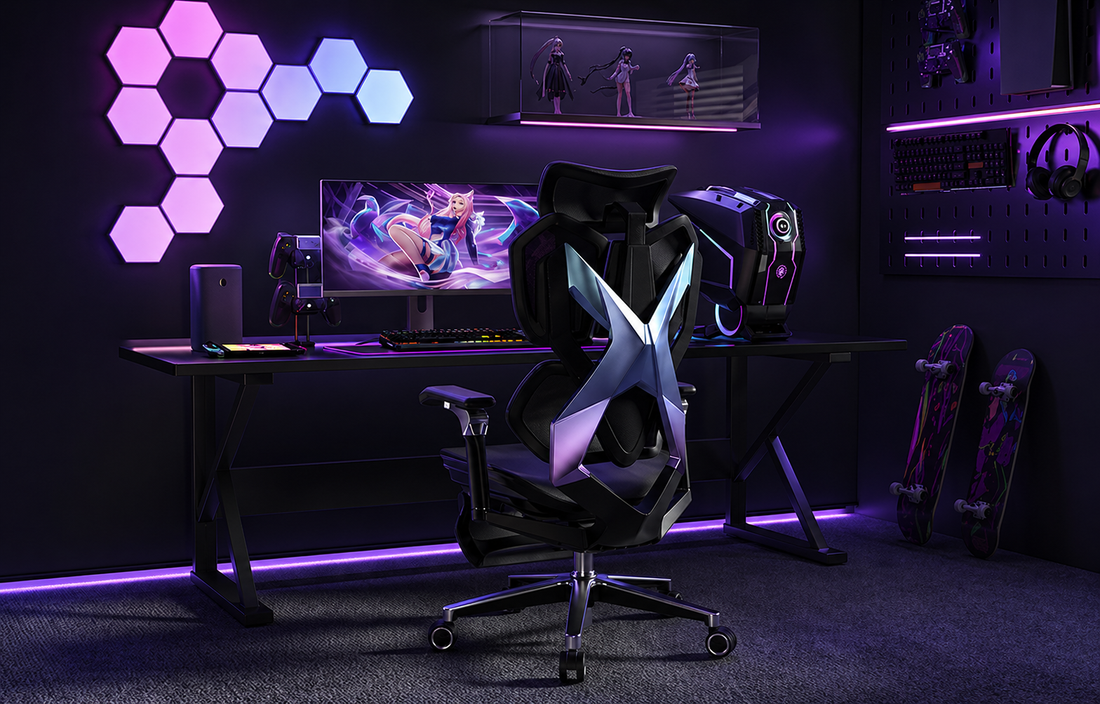
Xallking X5C — The Breathable AU Climate Chair Built for Australian gaming rooms that get warm in summer. Full adaptive mesh construction across backrest and seat contact areas. Continuous airflow through extended sessions. Silent PU castors for timber, tile, and carpet — the rental property pick. The right call for Sydney, Brisbane, and Perth gamers gaming through summer without consistent active cooling. Tested to ANSI/BIFMA standards. 3-year warranty. Buy on Xallking AU: xallking.com.au/x5c Also on SIHOO AU: sihoo.com.au/x5c |
|
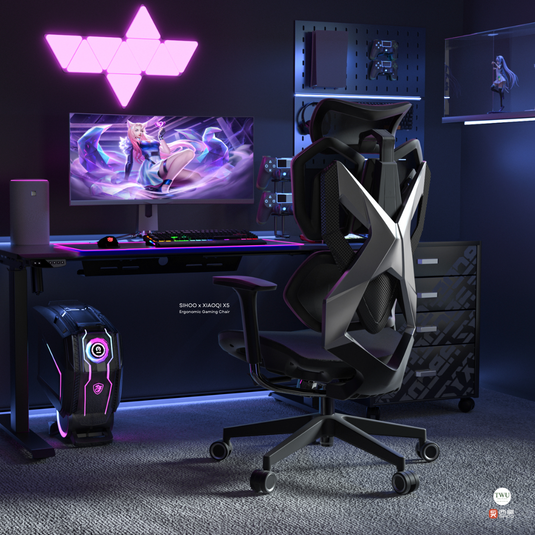
Xallking X3 PRO — The Streaming and Aesthetics Chair Built for streamers and content creators where the chair is part of the on-camera setup. Blue-violet gradient mesh, integrated LED lighting, futuristic mech-inspired frame. Strong ergonomic foundation beneath the aesthetic: adjustable lumbar, breathable gradient mesh, full recline range. The pick for Australian streamers who need a chair that looks as good as it performs. 3-year warranty. Buy on Xallking AU: xallking.com.au/x3pro Also on SIHOO AU: sihoo.com.au/x3pro |
All three chairs are available through both channels. Xallking Australia ships direct with delivery in 2 to 10 business days. SIHOO Australia stocks the same chairs at JB Hi-Fi nationally and online at sihoo.com.au, which may suit buyers who prefer to see the chair in person before purchasing.
The Bottom Line
Most Australian gamers are leaving physical capacity on the table every session by treating post-session recovery as irrelevant. The research is clear: disc rehydration requires movement, hip flexor shortening requires targeted stretching, trunk muscle fatigue requires reactivation, and cognitive fatigue requires screen-free time. None of these happen automatically when you stop gaming.
The players who keep gaming well into their late 20s and beyond without chronic pain are not just talented. They are treating the hour after the session as seriously as the session itself. For the broader picture of how physical habits determine career longevity in competitive gaming, see why Australian esports players retire young.
Thirty minutes after every long session. And if you are still gaming in a chair that is working against your body rather than with it, EOFY is the most rational time to change that.
The session you protect yourself after is the one that keeps you playing next week.
The Research Behind This Guide
Every recommendation in this post is grounded in published research.
[1] Amiri B., Behm D.G., Zemkova E. (2025). On the Role of Core Exercises in Alleviating Muscular Fatigue Induced by Prolonged Sitting: A Scoping Review. PMC / Sports Medicine. Core exercises effectively facilitate recovery from trunk muscle fatigue induced by prolonged sitting.
[2] Billy G., Lemieux S.K., Chow M. (2014). Changes in Lumbar Disk Morphology Associated with Prolonged Sitting Assessed by Magnetic Resonance Imaging. PM&R. Position changes and stretching every 15 minutes significantly reduced lumbar disc morphology changes versus 4 hours of continuous sitting.
[3] Boukabache A. (2021). Prolonged sitting and physical inactivity are associated with limited hip extension: A cross-sectional study. Musculoskeletal Science and Practice. Sustained hip flexion during sitting leads to increased passive muscle stiffness and reduced hip extension range.
[4] ScienceDirect (2024). Cognitive decline with pupil constriction independent of subjective fatigue during prolonged esports. Subjective fatigue unchanged up to 2 hours, increased significantly after 3 hours. Executive function and attentional performance showed measurable decline.
[5] Precision Healthcare Center (2024). Imbibition of the Vertebral Disc: The Role of Hydration and Posture in Disc Health. Frequent movement breaks during prolonged sitting facilitate disc imbibition. Short walking bouts most effective for disc fluid restoration.
Shop products from this article


